Electrification Strategy and Action Plan - A Case of Ahmedabad
Electrification Strategy and Action Plan - A Case of Ahmedabad
Ahmedabad: Training Programme on E-Bus Contract Management for AJL and AMTS Officials
Ahmedabad is among the pioneers in operating E-Buses in India, and the contract management for e-buses has been identified as a key challenge for the city officials. Currently (January 2022) AJL is operating about 200 electric buses with four different types of batteries and are planning to procure more e-buses.
To support the officials, a training programme on contract management for e-buses was organised by Center of Excellence in Urban Transport (CoE-UT), CRDF, CEPT University on 25th February 2022. 10 city officials including members from AJL and AMTS attended the training programme.
The event started by welcome address and a brief on the background and objectives of the study/study. Followed by an overview of the training programme, highlighting the economic and environmental benefits of adopting e-buses in place of conventional fuel buses. The scenario-based approach, outlining the feet requirement and level of electrification was presented emphasising on fleet of around 3000 buses with 75% electric by year 2031. The goal of this approach was to increase the public transport mode share, minimise the impact on environment and make it economically viable for the operators.
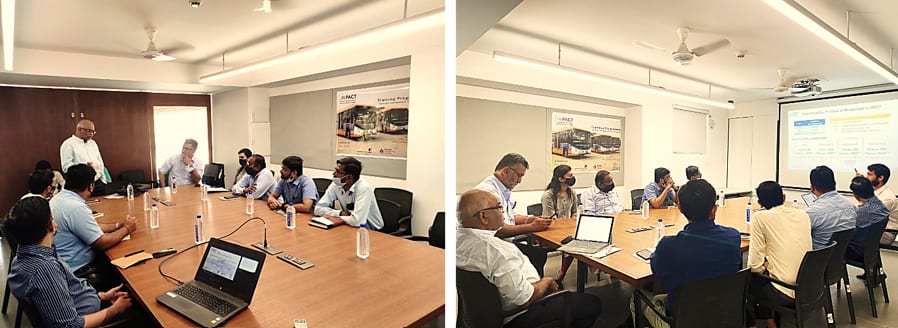
After this Mr. Hiren Joshi, Associate Principal, Coordinates illustrated the important aspects in Contract Management for E-buses, covered in three parts (i) Key features and characteristics of existing E-bus agreements including its differentiations, (ii) Key considerations for contract management in existing agreements and (iii) Key considerations in a contract for future procurements.
Overview of the existing and proposed fleet in AJL’s BRT system and its procurement stages have been discussed. Also, key features, characteristics, and allocation of risks in the existing two agreements i.e. FAME II Agreement (agreement between AJL and the operator, under FAME II) and the Non-FAME Agreement (agreement between AJL and the operator, not under FAME scheme). Further highlighted the key differences observed between the agreements, such as inclusion of assured debt payment to an operator during termination, escrow and substitution agreement in the FAME II agreement. These assure bankability to the operator, thus act as mitigation in case of investment risk.
Under the key considerations for contract management, ten key aspects comprising of bus specifications, inspection & acceptance of buses, rate revision method, performance monitoring process, termination, condition precedents, subsidy disbursement, escrow account, financial closure, and timelines were covered. Some of these key aspects were commonly found in both the agreements, while some were specific to the FAME II agreement.
The details on bus specifications and inspection & acceptance of buses were illustrated to explain the process to be followed by the authority during the procurement stage of buses. The comparison of the rate revision method (i.e. periodic revision of amount payable to the operator) of the agreements illustrated that the revision as per the formula stipulated in the FAME II Agreement will have low annual growth rate compared to rate revision formula stipulated in Non-FAME Agreement. The performance monitoring process including provisions regarding ‘Fine km’ and ‘Obligations of Operators’ was discussed. The differences observed in the termination provisions of both the agreements and their implications were explained. Also, details on certain FAME II agreement-specific provisions such as condition precedents, subsidy disbursement, escrow account, financial closure, and timelines were highlighted for elucidation.The concerns and queries emerged during the event were taken into consideration.
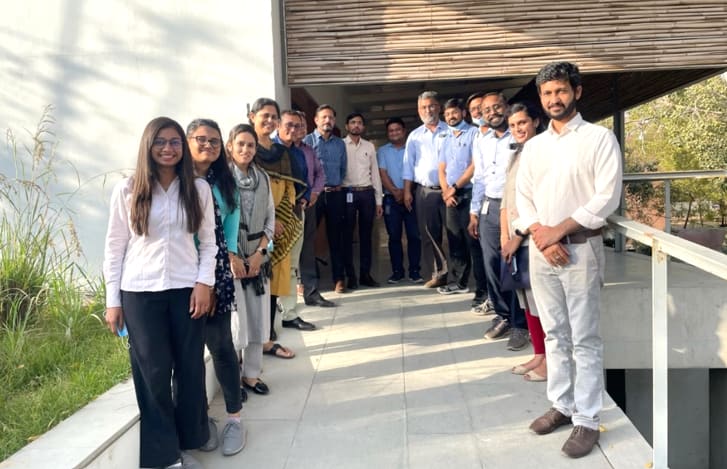
Figure 2 Participants of the training programme
Strategy for Electrification of Public Transport in Ahmedabad, Gujarat
Ahmedabad city has one of India's oldest city bus systems dating back to 1947. The city has continuously evolved, setting benchmarks in the Bus Rapid Transit System (BRTS) and pioneering the adoption electric buses nationwide. As the city gears up to expand its electric bus fleet, delve into how the project team is utilising electrification as an opportunity to enhance the overall public transport system. The strategic approach at local level paves the way for sustainable, affordable, inclusive, and low-carbon transportation, making a significant contribution to meeting national climate commitments.
An Overview
Check out how the project is contributing to the journey of Ahmedabad and Mehsana cities of Gujarat, India towards sustainable transport.
Strategy for Electrification of Public Transport in Ahmedabad, Gujarat
Ahmedabad city has one of India's oldest city bus systems dating back to 1947. The city has continuously evolved, setting benchmarks in the Bus Rapid Transit System (BRTS) and pioneering the adoption electric buses nationwide. As the city gears up to expand its electric bus fleet, delve into how the project team is utilising electrification as an opportunity to enhance the overall public transport system. The strategic approach at local level paves the way for sustainable, affordable, inclusive, and low-carbon transportation, making a significant contribution to meeting national climate commitments.


Write a public review